≡ Menu

MY FIRST DAY AS A RADIO DISC JOCKEY

first day on the radio


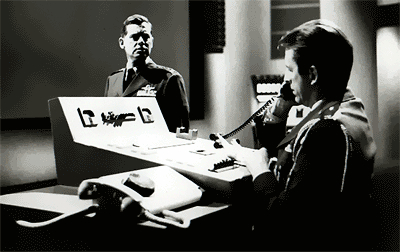
           This is from FAIL-SAFE, not from my radio station.


There are some things they don’t prepare you for in radio school.

I traveled from Los Angeles to a tiny town in Virginia for my first radio job.

My first day on the air was a Saturday.

The jock before me split as soon as I cracked the mic, and I was alone in the building.

The first hour went pretty well. Didn’t “wow” any records, no noticeable dead air.

And then, from inside the studio, I began to hear a competing radio station.

I’m not talking about some annoying RF interference. I mean another radio station was blaring from a speaker in the on-air studio.

You see, in the U.S. we had something called the Emergency Broadcast System.

Within each county, one station was designated the EBS station. In case of emergency, everyone was supposed to tune to that one station while the others suspended their regular programming.

Actually, it was kind of cool. We had a sealed envelope with the secret authorization password and everything. (Just like in FAIL-SAFE.) It was begun during the Cold War, and fortunately it never needed to be employed.

Our studio (and I guess all stations’ studios) was equipped with an EBS monitor. I was hearing our local EBS station through the monitor.

Four things you need to know about that EBS monitor:

1. It had no “off” switch.

2. It had no volume control.

3. It was hard-wired into the circuitry.

And most importantly:

4. It did not mute when I opened the studio microphone.

So for the rest of my show, every time I cracked the mic to read a live commercial, spot tag, public service announcement, news, etc….My audience heard a tinny version of the “big” station 15 miles away, through the EBS speaker and into my microphone.

A less than glorious start to my career.

As I write this, suddenly I’m visited by the long-buried memory of returning to my new apartment in that tiny town, filled with despair and thinking, “I’ve made a terrible mistake. I’ll never be able to do this.”

But tomorrow was going to be another working day, so I tried to get some rest.

{ 7 comments }

Radio Advertising Crash Course For Salespeople

{ 2 comments }

funny radio video

The best radio video ever.

{ 3 comments }

A few days ago I critiqued two commercials for a client.

The client is a direct marketer, so he takes this stuff seriously. (Direct marketers don’t distract themselves with ridiculous attempts at “branding.”)

I was typically meticulous in my critique. (You say “harsh,” I say “meticulous.”)

I’ve never told anyone this, but as soon as I’ve e-mailed a critique to a client, I become a little nervous.

What if they’re offended? I don’t want to offend people. Especially clients.

What if they’re so offended they demand a refund? I really don’t want that. (I also don’t give refunds on critiques, and no one’s ever asked for one. Still, the concern does cross my mind.)

So when my email inbox included two messages from him this morning, I took a deep breath before opening them.

The first was in response to my first critique:

Awesome! Thanks for doing a killer job on this… this is VERY helpful. Once I’ve produced some new spots using your suggestions I’ll send you them to you to review.

The second message, responding to the second critique, said:

Thanks again Dan… great suggestions and points.

It was a nice way to start the morning.

Usually I critique commercial copy before it’s produced. That makes sense to me, because that way the client has time to change the copy before going into production. But in this case, the spots had been written and recorded.

One hour and 16 minutes after I received the client’s second “wow, thanks!” response, I received a very long email from someone I don’t know.

That someone appears to be the guy who wrote and produced the commercials I had critiqued. It was a cc of a message he had sent to the client.

It was not what one would call a rave review of my critique.

Two elements of his rant leapt out at me:

1. He defended the use of the lame voice talent (whom I had pointed out sounded like a schlocky announcer who clearly was simply reading the copy he was being paid to read) by saying, “With our budget, that’s all we can afford.”

Ridiculous.

Those particular spots didn’t require a Harlan Hogan. I know plenty of guys (they used a male voice) who would’ve done a much better job for $300 or so.

I don’t know what they paid their VO guy, but if they’re not willing to shell out $250 – $300 for a decent announcer read, they need to adjust their priorities.

(Come to think of it: The client paid me more than that for the two critiques. And he got his money’s worth. Certainly they can afford a decent voice performer to deliver their sales message.)

2. The email was very long. I mean, this guy was upset.

And Then I Did Something Very, Very Smart.

I closed the email without reading it.

I got the gist of it: “This O’Day guy doesn’t know what he’s talking about.”

Why read further?

So I could become offended?

So I catalog and rebut his evidence of my alleged incompetence?

A number of years ago I managed to learn not to waste my time responding to hate mail or nutty mail. Why argue with a nut or a jerk?

To be fair: This guy’s rant didn’t appear to be hateful or nutty. He just totally disagreed with me.

But do you know what would have happened if I had taken 2 minutes to read his entire attack (or, from his perspective, the defense of his work)?

I would have spent hours mentally refuting his every point. Completely involuntarily.

That’s how my brain works. If I think I’ve been unfairly attacked, my instinct is to defend myself — even if only within the privacy of my own mind.

But I had other stuff to do today. Why waste any of my sorely limited time (and even more severely limited brain power) marshalling an argument I never would deliver?

What Does This Have To Do With You?

Maybe nothing.

Or maybe you’re a radio station producer and a thoughtless salesperson mentioned, while passing you in the hallway, “The client hates that spot you did for him.”

Oh? You mean that spot that was approved every step of the way and now is on the air?

Let it go. Getting upset won’t help.

Or you’re an account exec and the Traffic Director screams at you because you didn’t remind her that she had promised to change your client’s rotation, so she forgot to do it and it’s all your fault.

Let it go. Let her words float past you like a summer breeze. (You don’t bother to argue with the wind, do you?)

Or you’re a jock, and the station engineer (!) pointedly tells you the comedy bit you did on yesterday’s show “really wasn’t very funny.”

Should the station engineer be critiquing the air talent? No.

Should you care anything at all about whether the station engineer thinks you’re funny or your show is good? C’mon.

Let it go.

Use that time and energy for something constructive.

Why, look at me. The time I saved by not reading and then mentally constructing a devastating response to that email?

I used it to write this post.
{ 2 comments }

Recently I did a phone consultation with a Radio Advertising Advantage member — a radio station account executive in a major market.

One of his biggest clients is a laser eye surgeon. The client does tons of radio advertising.

The client measures the success of an ad campaign by the number of phone calls it generates. And the client is unhappy with his advertising results.

1.  His commercials — like those of virtually every advertiser in this category, in every market —  boast about how many operations he’s done.

2.  At the end of the boasting, the announcer gives the phone number several times —  without giving the lister any reason to call.

3.  The client writes all of his own copy and refuses to consider any new approaches.

To recap: The client considers himself to be an advertising expert and is unhappy with the results he gets.

Can you say “delusional”?

Here are the facts you need to know about this business category:

A)  Everyone who wears glasses and/or contact lenses would love to have perfect vision without the aid of lenses.

B)  Many of the people I just described cannot afford the surgery.

C)  Many of the people I just described can afford the surgery.

D)  For the people who can afford the surgery, only one thing prevents them from having it done:

Fear.

Most of us have heard of (or know) people who had the surgery and love the results.

And most of us have heard of (or know) people who had the surgery and now suffer from vision problems they didn’t use to have: Blurred vision….Light sensitivity….Poor night vision….Distorted depth perception.

If you’re unlucky enough to suffer negative effects from the surgery (beyond the adjustments that are predicted for all patients during the first few days after the procedure), those effects are irreversible.

Hey, I’d love to have perfect vision.

But to me it’s not worth the risk of damaging my vision… permanently.

It’s not worth spending the rest of my life with blurred vision — and with the knowledge that I caused it by opting for laser surgery.

I can afford the surgery. So what stops me?

Fear.

What should an ad campaign promise? Perfect vision for the rest of your life.

What must an ad campaign find a way to address? Prospects’ fears.

You don’t need to address them explicitly (although you might choose to do so). Maybe you’ll say something like this:

“ONE DAY” – :60

You know that one day you will have laser eye surgery. You don’t like having to fumble for your glasses. Contact lenses are a pain.

You’ve heard about all the famous actors and athletes who have had laser eye surgery, about how it’s changed their lives.

In fact, you know some people —people you work with, neighbors, people from your church — who already have achieved perfect vision with a simple, completely painless 10-minute procedure.

But….Well, you’re a little nervous about the whole thing.

The people at Ed’s Laser Eye Clinic understand. After all, many of them already have had the procedure themselves.

That’s why Ed’s Laser Eye Clinic is offering you a completely free consultation, to help you determine if the time is right for you.

Laser eye surgery isn’t for everybody. But it is for most people who presently wear glasses and would like to throw them away forever.

To schedule your free consultation, just call 310-476-8111. That’s 310-476-8111. Let’s find out if the time is right for you to see your future.

{ 2 comments }