≡ Menu

Have you ever sent an email to someone at a radio station — only to receive an automated reply informing you the person no longer works there?

If so, the message probably was similar to this one, which I received yesterday:

Bob Smith is no longer employed at XYZ Broadcasting Co. If you need to contact someone please call our main office during normal business hours at (333) 333-3333.

Contrast that with an email that I received exactly one month earlier. This was sent proactively — before the people in his address book would have a chance to send an email that would only bounce back to them.

Good Afternoon!

I wanted to send you a quick email to let you know that I will be leaving XYZ Broadcasting — KXXX / KYYY as of today. I’ve accepted a position with Radio X as Market Manager in (City, State).

I’m excited about the new challenges, but somewhat saddened with the fact that I leave an incredible staff behind. KXXX and KYYY Radio have always strived to deliver the very best marketing and service to our clients. Let me assure you that this will not change. Our staff stands ready to serve you for years to come delivering the same quality service you have come to expect from XYZ Broadcasting. If you should need anything, please don’t hesitate to give me a call on my cell at (333) 444-4444 or email at jameson@idooie.com. My new business contact information is listed below as well.

To streamline the transition process, I’m also including two key contacts for your address book. Please forward any email, faxes or calls to their attention. Barbara Bell — Sales Manager — (333) 333-3334; bbell@XYZBroadcasting.com; Carol Collins — Business Manager — (333) 333-3335; ccollins@XYZBroadcasting.com.

Thank you again for your continued business and I look forward to working with you down the road.

Respectfully,
James Jameson
VP of Radio Operations
XYZ Broadcasting

Compare those two messages, as well as the thought processes behind them.

The first one says, “The person you’re trying to reach doesn’t work here any more. If you’re an advertiser or otherwise do business with our station, call us at our convenience and we’ll try to find someone who is willing to talk to you.”

The second one says, “This person is leaving for a new job in another city. If you want to reach him personally, here’s how to contact him. If you wanted to talk to him about business related to our radio station, we want to make it easy for you to reach the right person.”

This is so obvious, right?

The second version is the one that makes good business sense.

So why is the first version is so much more familiar to you?

{ 4 comments }

MONDAY RADIO COMMERCIAL SMACKDOWN: Hollywood Bowl

“I’m glad we got to the Hollywood Bowl in time to catch the sunset.” — A typical example of “telling” instead of “showing.” When they are at the Hollywood Bowl, real people rarely find it necessary to remind themselves that they are at the Hollywood Bowl.

The SFX don’t sound like the Hollywood Bowl. They sound like generic homina homina crowd noises. Every sound in a radio commercial will generate a visual image in the listener’s mind. Some listeners will picture a party, others an amusement park….But this doesn’t paint the specific picture of the Hollywood Bowl.

What is this guy’s intent? Why is he babbling on about sunsets? Is he trying to impress the woman? Is he attempting to share his passion for sunsets? No way of telling from his delivery. He’s not having a conversation; he’s performing a monologue.

For the first 30 seconds it sounds as though they’re trying to sell the Hollywood Bowl experience — a bland, “nice place to come when the sun is setting” pitch. That half of the spot ends with what the writer apparently thinks is a joke — that the guy lives on Sunset (Boulevard). That’s funny?

But suddenly, the Beach Boys begin to sing. Unfortunately, some female immediately begins talking over them, forcing us to choose: Do we listen to “Wouldn’t It Be Nice” or do we attend to this woman’s babbling about experiencing our perfect sunset?

HERE COMES THE CLUE TRAIN: When you talk over the vocals of a huge hit song, no one listens to your words. (Guess what? The Beach Boys won’t be appearing there. If you listen closely enough, you discover they’re trying to promote an appearance by Brian Wilson.)

“Beach Boys co-founder Brian Wilson” — no human being who would be interested in seeing Brian Wilson perform would use those words to describe him. “Brian Wilson of the Beach Boys,” maybe. Or just “Brian Wilson.” Presumably under similar circumstances they would refer to “Former Beatles bass player, Paul McCartney.”

But wait. It’s not about sunsets or the Hollywood Bowl or Brian Wilson or the Beach Boys; it’s about the “end of summer,” complete with fireworks.

“Hey, you wanna go see Brian Wilson at the Hollywood Bowl?”

“No, I can’t stand him or his music.”

“But they’ll have fireworks.”

“Oh, in that case…Sure!”‘

No, no, It’s not about sunsets or the Bowl or Brian Wilson or the Beach Boys or the end of summer or fireworks; it’s about THE SOUND OF MUSIC — for which apparently we’re supposed to dress in costume, participate in a parade, and then sing along.

Hey, we’re approaching 60 seconds! Let’s see if we can end with a ridiculous declaration. I’ve got it: “The Hollywood Bowl: Part of your life.”

For the many listeners who don’t consider the Hollywood Bowl part of their lives, this advertiser made an untrue statement.

What do you call an advertiser who tells the truth 99% of the time? A liar.

What do you call this radio commercial? A meaningless mess.

{ 2 comments }

O’DAY’S TRAVEL WOES #5: A Suspiciously Perfect Trip

September, 1993:

September was full of travel adventure. I presented The Psychology Of Management at the NAB’s Radio Convention in Dallas. Big deal, so he went to Texas.

Okay, how’s this for an itinerary:

On a Monday in late September, I flew from Los Angeles to Amsterdam, where I changed planes and continued on to Stockholm. In Stockholm, I changed planes (and airlines) again for a flight to Kristianstad, Sweden, where I arrived Tuesday night.

On Wednesday I conducted an air talent seminar for Sven Linderoth and Radio Kristianstad. That night Sven drove me to the airport, and I flew back to Stockholm.

On Thursday, I conducted an air talent seminar for Anne Chaabane and Swedish Local & National Radio.

On Friday I conducted my How To Create Maximum Impact Radio Advertising seminar for Scandinavia’s largest advertising agency, ARE Annonsbyrå. (My hosts were Gaute Hanssen — who had attended an earlier seminar of mine in Stockholm — and his Managing Director, Harald Ullman.)

Friday night I flew to London, where on the following day I conducted an air talent seminar for presenters from throughout the U.K. The seminar was organized and produced by Lin Glover (ably assisted by Amanda McAllister).

Sunday was comparatively tame; I travelled but did not perform. I flew from London to Amsterdam and prepared for four days of seminars there.

On Monday I conducted an air talent seminar in Utrecht, for Ben Groenendijk and ROOS, Holland’s public radio service. (Ben organized all of the Utrecht seminars, which were attended by radio professionals from throughout The Netherlands.)

Tuesday: Seminar for Dutch program directors.

Wednesday: Talked to journalism students in the morning, then drove 45 minutes or so to Amsterdam, where I delivered the keynote speech at the 3rd Dutch Broadcast Congress that afternoon, then returned to Utrecht.

Thursday: Commercial copywriting for radio & ad agency people.

And then I rested?

No, after the last Dutch seminar I was driven back to the airport in Amsterdam and got on a plane to Milan, Italy.

Friday: Air talent seminar seminar for RTL, Italy’s second largest national radio station.

Saturday: Commercial copywriting seminar for RTL.

Sunday morning: Caught a VERY early flight to Amsterdam, then connected back home to Los Angeles.

For those keeping score at home, that’s nine flights in five countries on three airlines taking me to 11 seminars/speeches in 14 days.

So….How was it?

Like clockwork. I couldn’t believe it. Not only did I not miss a single connection, I even got on an earlier one (more on that in a moment).

Here’s what little I remember of those two weeks:

I spent most of my flight to Amsterdam (on the way to Sweden) practicing saying “thank you” in Dutch. (Phonetically, it’s “Dahn-koo-vel.”)

One advantage European airports have over North American airports is shorter minimum connecting times. I arrived in Stockholm — a very friendly airport — on a KLM flight, collected my luggage and brought it to an SAS window for the connecting flight to Kristianstad. The agent looked at my ticket, noticed my flight wouldn’t leave for another two hours, and asked, “Would you like me to put you on a flight that leaves for Kristianstad in ten minutes?”

Having begun my trip many hours earlier in America, my answer was an eager “yes.”

Ah, but a problem. My host, Sven Linderoth, would be picking me up at the airport in Kristianstad. How would I get word to him of the schedule change?

Pulling out a few Swedish coins from a previous trip, I cautiously approached a pay telephone. I could not figure out how to use it….and my plane was leaving within minutes.

I found a sympathetic Swede who showed me how to use the device and even tried to explain how to place a long-distance call. Somehow I succeeded in calling Directory Assistance and, miraculously, on my second attempt I managed to reach Radio Kristianstad and advise Sven of the change.
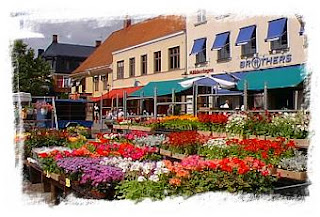
Kristianstad Sweden

Kristianstad is a picture postcard of a Swedish town. It’s named after a Danish king — Christian IV — who visited the town only once, for a week. During that week, he laid out plans for the entire city.

Kristianstad was conceived as a fortress city, with only two entrances. From the center of the town, you can see both of the gates. The entire city was surrounded by a huge wall which, regrettably, the town fathers decided to tear down at the turn of the 20th Century. (Can you imagine what an incredible sight that 30-foot wall would be if left intact today?)

Christian IV Hotel Kristianstad

I stayed at the Christian IV Hotel, a very gracious and impressive building. (It used to be a bank.) My most indelible memory of that hotel is the music: In the hallways and in the elevators, 24 hours a day, they played Frank Sinatra songs.

Kristianstad was so beautiful that it seemed like a crime to leave just 24 hours after my arrival. I’ve hoped to return on a business/vacation trip ever since.

Remember I said the airport in Stockholm is friendly? It’s the only airport I’ve seen where the bathrooms are stocked with drinking cups…a very nice, unexpected little touch. (Have you ever tried to take vitamins or Dramamine with the aid of a water fountain?)

Oh, before we leave Sweden: My first Swedish lunch, back in May, was in the cafeteria of Swedish National Radio. What did I eat? Seafood? Meatballs?

Nope. I had the day’s special: enchiladas. On this return trip, I couldn’t help but order my now traditional “Swedish” meal.

Swedish Food

I am, however, pleased to report — from another dining experience while in Stockholm — that Swedish meatballs are a lot tastier than the stuff we eat in the States.

On the plane to England from Stockholm, I learned from a newspaper that Alan Ayckbourn had a new play running in London. This was hardly surprising; he’s the world’s most successful English-language playwright. He also happens to be my favorite. I mentioned this to Amanda McAllister, and she managed to secure a couple of tickets for the performance following the seminar.

The play was, of course, very good….I assume. I was so exhausted from the seminar that it took a tremendous effort for me not to fall asleep. But I was quite excited, nonetheless, to see my 10th or 12th Ayckbourn play.

Next Week: My September adventure continues, as I “went through my back” in Holland. (Ask a Dutch friend to translate.)

{ 2 comments }

RADIO STATION PROMOTION (which also saves the planet)

 Whole Foods Reusable Grocery Bag

The U.S. gradually is emulating much of the rest of the “first world” nations by discouraging the use of “use ’em and discard ’em” grocery bags. Instead, shoppers are being prodded into bringing their own canvas (or canvas-like) shopping bags to the supermarket.

Major grocery chains are selling such bags, adorned with the store logo. This strikes me a good opportunity for your station to get ahead of the curve, eventually be seen as a trend leader, and garner massive consumer exposure.

A quick Internet search reveals wholesale costs per bag as low as 59 cents each. Why not partner with your local Big Supermarket Chain, put both your logos on the bags, and price it so that it’s self-liquidating?

You put up half the investment (which is returned if the item truly self-liquidates). The supermarket chain buys an extra schedule touting your joint “Save The Planet” initiative. You price the bags as low as you possibly can, both so you’ll look good to the public and to make it a “no brainer” for someone to buy one and do their small environmental duty.

Or maybe convince some well-heeled environmental group to fund the bags in exchange for the massive promotional and distribution efforts you and the supermarket will be making.

How To Ruin This Idea: Make it look like your typically cheesy radio station giveaway item. Make your logo big and garish, with pictures of your air talent and exhortations to listen each Thursday morning for your chance to win $10,000.

That’s not the kind of bag most people want to be seen with in public.

Instead, your logo should be small, discreet, tasteful. Name and dial position, that’s it.

One side of the bag features the store logo. The other features yours, in the lower left corner. (With nothing else printed on that side of the bag, the logo will stand out.)

Anya Hindmarch Reusable Grocery Bag

Just an idea.

{ 0 comments }

TWO UNIQUE RADIO IDEAS FROM SIOUX FALLS

I’m the first to admit it: I’m kind of expensive. So I’m especially tickled when a small market radio group brings me in to work with its air staff, because it demonstrates that management really does care about the people who work the front lines every day.

Years ago Jake Jacobs arranged for me to spend two days working with the air talent of Results Radio in Sioux Falls, South Dakota. On the afternoon of the second day, I coached them through my Defining Your Unique Listening Proposition workshop. Here are two quick ideas they came up with.

• Instead of ending his listener phone calls with, “What’s your favorite radio station?” (a predictable cliche), one jock decided to try ending each call with, “What’s your favorite condiment?”

Scotty Collins came up with a prerecorded “Stunt Winner,” which can be played as needed instead of airing the occasional bored-sounding contest winner. The Stunt Winner will ALWAYS sound incredibly excited, grateful, and forever loyal to the radio station.

{ 0 comments }