≡ Menu

RADIO PERSONALITIES: NO MORE SATURDAYS

LEAP OF FAITH RADIO PRODUCTION with Bobby Ocean

radio broadcasting production DJ graphicWe’re hearing it more and more now that professionalism has been deemed outmoded, its cost cut and been replaced by playback machines. In fact, hearing anything other would be newsworthy.

Where there were once people dedicated to their craft, they are outnumbered by those committed to simply surviving, to pulling in any paycheck, no matter how small. Where the airwaves were abundant with the industrious buzz of talent and creativity they are now droning along in very similar cost-cutting air-filler. It is boring, shallow and frustrating.

Many of us are astounded, still. Many remain bitter, or blindly misinformed. “Why, when we so need the work, and they so obviously need the experience, won’t they even return our phone call?” “I can DO that stuff.” “I’ll take what they’re offering and sound so much better.”

Yet, more every day, we hear that too-young-to-walk-straight, green-behind-the-ears, immature, mini-clique dialogue on our radios that means, “Hi, I’ve been in the business seven days!” Rather than a hint of practical know-how or intellect, our brains are insulted with regularity by the growing zombie cast of “Cost-Cut Speakers,” who know nothing about eh real world, its history or people, but have several off the cuff remarks involving E-Channel pop references from the last 2 days, even though English is still a hurdle.

Nothing sounds local. Common ordinary everyday towns, streets and burbs are commonly mispronounced. Date-sensitive ads are now routinely found on the log well past the holiday.

Commercial Broadcast Radio is quickly becoming typecast by its amateur-sounding voices, as a cheap, McDumb-cluck, medium that gives the impression, immediately upon tuning in, that, rather than inform or entertain, they chose instead to go on the air and pretend to be on the radio. If Keith Olbermann wasn’t so obsessed with power politics, he might give radio the “WTF Movement Of The Era.”

Because there is such a dearth of voice talent on the public air waves, because so little is heard any more of such practices as phrasing, breathing, pacing and inflections, there are some easy pickin’s among listeners for those on the air who make the time and commitment to get better.

Here’s a running start that will make anyone sound way better today than the person who says “Saturday” on the air. Realize: There Is No such thing. Not for you. From now on, YOU – DON’T say “Saturday.” You say “SADD-erday.” Sounds tons better.

Now, you take it from there and remain committed. Remember, you won’t sound any Better; but, you’ll sure Sound BEDDer.

{ 1 comment }

radio programming graphicA loyal reader writes:

“I’m the program director of a radio station that uses a lot of satellite fed music. The satellite service provides call letter drops and liners, etc…with the voices of the satellite announcers. Should I use the satellite announcers to voice these liners or should I use our station’s image voice?”

Assuming the satellite announcers do a decent job of it, I’d go with them. Here’s why:

1. A radio station requires consistency of sound. That does not mean using only one voice. But when someone speaks as “the voice of” your radio station, the audience should be able to recognize that voice.

2. The operational goal from the viewpoint of the end user (the listener) is seamlessness. You want everything to sound as though it’s happening live, in your studio, in the very town where the listener is tuning in.

But if there’s a line of demarcation between your jocks and the overall radio station sound, your seams are showing.

You should, however, feel free to voice your preferences of announcers for your drop-ins. If the service assigns the drops randomly to their announcers, you might be airing too many “station voices.”

Or you might be airing a voice that simply doesn’t present your radio station the way you’d like. Do not simply settle for what they “give” you. (Remember, they’re not giving you anything; you pay for it.)

{ 0 comments }

MONDAY MORNING RADIO COMMERCIAL SMACKDOWN: FedEx

radio advertising graphic

FedEx Radio Commercial Fails To Deliver

Welcome to another in my series of critiques of award-winning radio commercials — those honored as “the best of the best” by the 2007 Radio Mercury Awards.

A few are Good. Many are…Not Good. Really, really, really Not Good.

This particular spot was a finalist, while another commercial in the same campaign was a $5,000 winner. (The $5,000 winning spot was just as bad.)

Why This Radio Commercial Is Terrible

Does this radio commercial paint pictures in the listener’s mind? Yes.

They paint all those vivid pictures of violent actions, but none of the pictures has anything to do with FedEx’s sales message.

They are forced to rely purely on spoken words that no one pays attention to.

Why does no one pay attention to those words? Because the words are not part of the story.

Not only that, the words are being spoken by a guy who pretty much is an idiot.

radio commercial copywriting graphic

HERE COMES THE CLUE TRAIN

It’s almost never a good idea to have a guy who sounds like an idiot tell listeners why they should use the advertised product or service. The person who delivers the sales message (either by word or by action) should be someone with whom the targeted radio listener identifies (or would like to identify) with.

This isn’t a story about a problem that is solved by using FedEx. It’s a story about shooting people with paintball guns.

Which is reinforced by the last line of spot.

This is an inane, incompetent commercial.

But hey, the campaign won an award. So the ad agency lived happily ever after.

{ 4 comments }

The current issue of my Radio Programming Letter discusses radio & online social media.

This post is for my subscribers to use to add their own comments, thoughts, objections, examples, etc.

{ 3 comments }

radio jobs radio commercial copywriting graphic

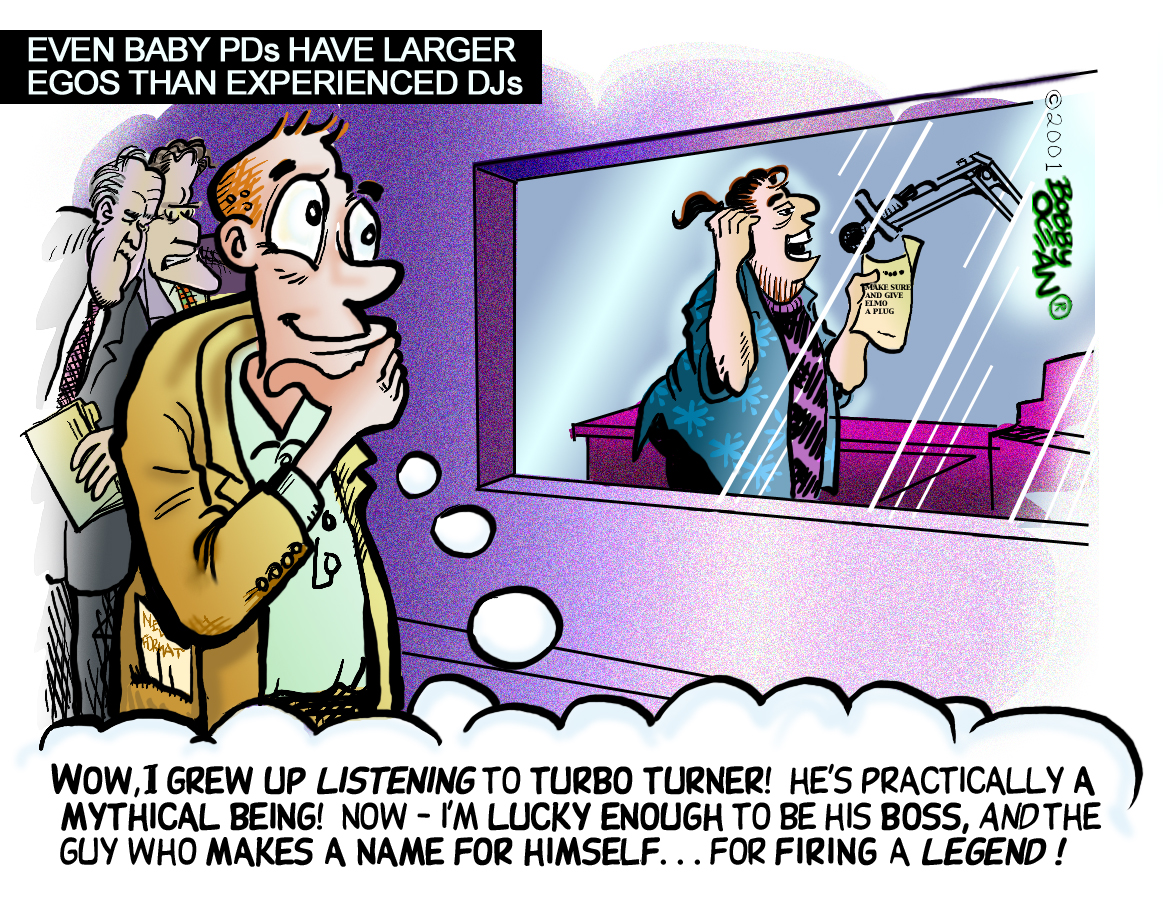
Illustration © 2009 by Bobby Ocean

{ 1 comment }