≡ Menu

A REALLY GOOD CHRISTMAS SALE COMMERCIAL

This being the holiday season and all, I offer this as an antidote to the unrelenting negatively of my Monday Commercial Smackdowns.

Produced by Rich Bird when he was at WCIL.

{ 5 comments }

RADIO FORMATICS AT THE NORTH POLE

radio dj graphic

Illustration © 2009 by Bobby Ocean

{ 2 comments }

A RADIO DJ WHO KNOWS HOW TO USE SOCIAL MEDIA

I don’t know this guy.

Don’t know if I’d like his on-air work.

But he seems instinctively to know how to use social media. (Check out his number of Twitter followers.)

{ 3 comments }

October 1995 (continued): Upon my arrival in Auckland, New Zealand, I was met by Leon Wratt, who graciously drove me the two hours to Hamilton, where the next day I was to present an air talent seminar for The Radio Works.

After a quick nap, I was taken to lunch by Leon (the program director) and Marketing & Operations Manager Kate Rigg.

After touring their radio operation (and convincing GM Claire Monaghan to show me where the “Eat Your Own Food” memos are posted), I returned to my motel.

What are “Eat Your Own Food” memos? All radio stations have them, usually posted on a bulletin board in the employee lounge. They offer an excellent insight into the psychodynamics of the station’s staff. Typical examples include:

“Reminder: NO ONE who is not a station employee is allowed in the building after 5:00PM on weekdays…and NEVER on weekends!”

“REMINDER TO AIR STAFF:  KXXX will have a booth at the annual County Fair. Although there is no pay involved, we hope all of you will volunteer to work the booth this weekend. Please check with the Assistant Program Director to find out exactly what times you have volunteered for.”

And the most common one of all:

“I can’t believe I have to say this AGAIN, but some people just don’t seem to get the message: “DO NOT EAT ANY FOOD IN THE REFRIGERATOR THAT YOU DID NOT PUT IN THERE!”

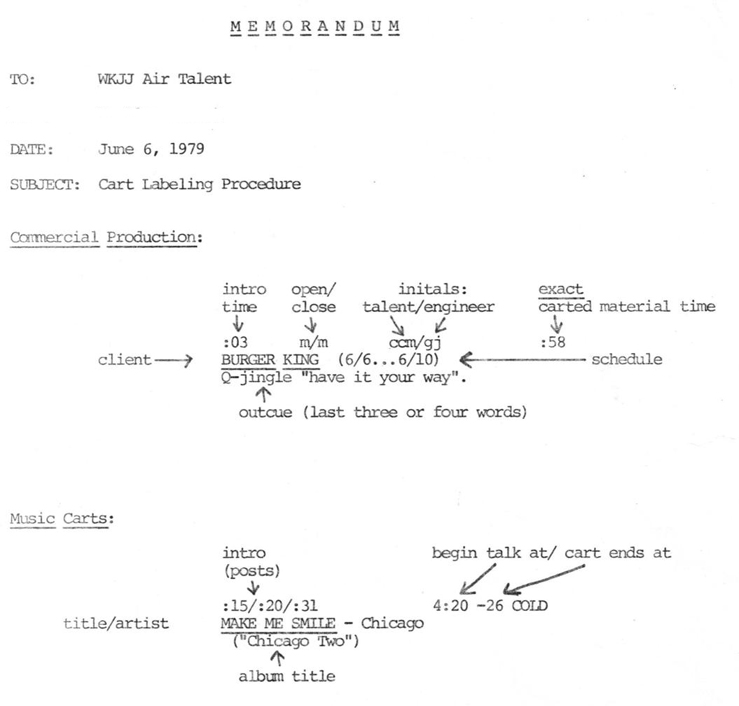
I couldn’t locate any angry memos, but I did track down these….
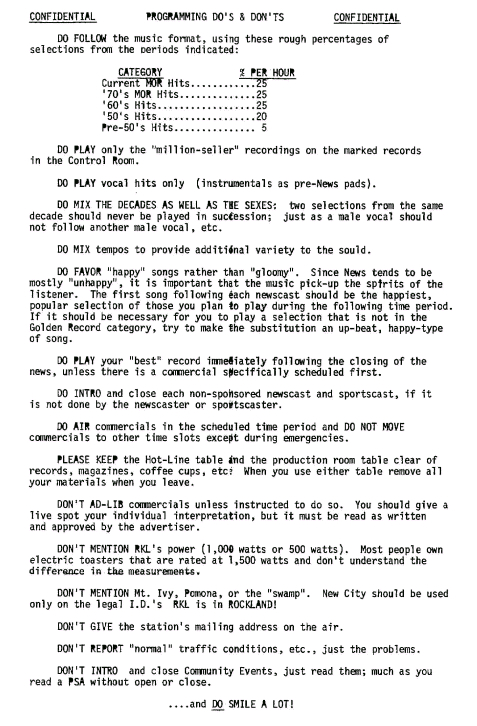
radio advertising graphic


radio commercials graphic


{ 3 comments }

REALLY OLD SCHOOL RADIO PRODUCTION, REDISCOVERED

LEAP OF FAITH RADIO PRODUCTION with Bobby Ocean

radio commercials graphicJust under 400 years ago in England, in the County of Derby, there was  a gentleman by the name of Philip Stanhope, who  enjoyed his title of British Statesman, as Lord Chesterfield. His lifetime, so far removed from our computer networking and Book of Face connections, included a robust preoccupation with social networking and its success. He most certainly would have had his own blog.
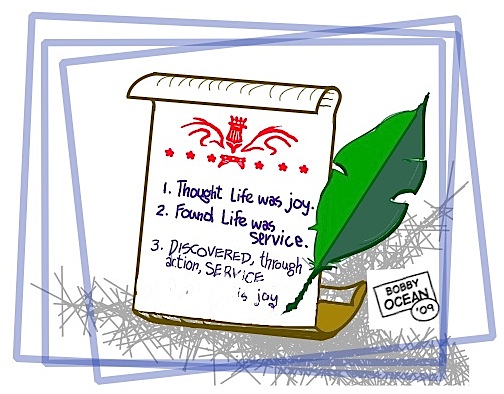
His Letters are replete with advice about how to succeed in society, such as this little gem which can easily be construed as a How To Succeed In Voice Over mini seminar. In one sentence, he communicated three univeral principles of writing and production for broadcast. He wrote:

“Even where you are sure, seem rather doubtful; represent, but do not pronounce, and if you would convince others, seem open to conviction yourself.”

Taking this sentence into the recording studio we see three excellent areas within its structure which we find most helpful. First, “…where you are sure, seem rather doubtful…”

The conversion to 21st century radio Production might read:

Lead the listeners into your realm of thought but do not make conclusions for them. Allow them to process your information, then reach their own conclusions.” You know that telling someone something is not as powerful as having them discover it for themselves, so you create the scene in which they may do just that.

Then Lord Chesterfield added:

“…represent, but do not pronounce…”

Key in commercial Voice Acting today is not being detected selling. So actors are currently trained to steer away from the smile-mouthed pitchman and operate from a manufactured honesty, “confessing the truth.” Today’s VO actor doesn’t use energy to convince the listener, but, instead, to “reveal” the product information in a manner that suggests it is the ultimate solution. The pitch is concealed, hiding the pronouncement under the more acceptable admission.

And finally:

“… if you would convince others, seem open to conviction yourself.”

Who seems the more believable to you? The guy whose mind is made up and remains tightly “on message,” or the guy who has something interesting to say, but also seems flexible and remains willing to listen? Duh, THAT was easy – an open and shut case about an open and shut mind.

Wow. Three valuable “universals” that have stood the teat of nearly 400 years and still function beautifully in our work today. Way to go, Phil, um, I mean, Lord Chesterfield.voiceover graphic

It was this very same gentleman who also said, “Whatever is worth doing at all is worth doing well.”

{ 0 comments }