Chuck Blore, the radio programming architect of KFWB “Color Radio,” Los Angeles, explains the “brilliant” idea he had for presenting news on the radio.
September, 1996 (continued):
One of the most memorable moments of this New Zealand seminar trip occurred during the second day of Air Personality Plus+ seminars for David Brice and Radio New Zealand. The first was in Christchurch; the second was the following day in Auckland.
The NZ rugby team, the All Blacks (named for their all-black team uniform), had just won a test match series against their arch rivals from South Africa, and they were feted with a huge outdoor celebration immediately outside the Carlton Hotel (where our seminar was held).
That evening I flew to Hamilton for a return engagement with The Radio Works (thanks to Steven Joyce and Kate Rigg).
Last week I described the huge suite I had been ensconced in at the Carlton Hotel in Auckland. I mention this again only to describe how small the 15-seater airplane that brought me to Hamilton was: It was smaller than the suite’s living room. (Seriously.)
I was especially happy to return to Hamilton, because that was the first New Zealand city I ever visited…during my maiden Kiwi visit a year earlier. Of course, I didn’t have time for much reminiscing there, because when the seminar ended I headed directly back to Auckland. Darryl Paton found himself “volunteered” to drive me there.
The following day was spent with the on-air staffs of Median, in another return visit arranged by Guy Needham and Mike Regal.
And then it was off to the airport to fly to Taupo for the Radio Broadcasting Association’s annual convention. (Actually, this, too, was a return engagement. On my first trip to New Zealand I had previously met only one of the Kiwis I’d be working with, Steven Joyce. On this trip, however, most of the time I felt like I was with old friends.)
At the convention — once again quite well produced by Janine Bliss and Brent Impey — I presented How To Create Maximum Impact Radio Advertising and also moderated a no-holds-barred “debate” between male & female broadcasters at the RBA banquet.
The day after the convention ended, Janine allowed me to hitch a ride with her on the 5-hour drive back to Auckland (from where I would fly home to Los Angeles).
Periodically along the side of the highway I noticed small, white crosses. Janine explained that these marked the spots where people had been killed in driving accidents; the crosses were placed there by the loved ones of the deceased.
Seeing all of those crosses was both touching and, in view of their number, very sad.
Janine dropped me off at the airport, I checked in for the flight, and settled in at the United Airlines lounge at 2:47PM; I wouldn’t board the flight until 5:00. But I was quite happy because a boxing match was scheduled for 3:00 — Mike Tyson vs. Bruce Seldon.
There was one television set in the lounge, stuck in a little corridor on the side. I went directly to it, found the right channel, and commandeered it before anyone else could lay claim to it.
Being rather tired at the end of a very full week of seminars, I couldn’t think of a better way to pass the time than to watch the fight.
(If you’re a boxing fan, it’s obvious to you that I didn’t know at the time how lame the match would be.)
There were four preliminary bouts, however…And my flight was called just before the main event began.
Oh, well.
(First in a series)

A Loyal Reader Asks:
“How can you teach young jocks to ‘be real’ — to break out of the ‘I’m a DJ’ persona and become communicators?”
Clearly define their jobs.
When I was a jock, no radio station program director or station manager ever bothered to tell me what I was expected to accomplish.
Instead, they told me what I was expected to do: Play the music, intro or back-announce the songs, read the news, “do” the contests.
It took me quite a while to figure out that my real job was to share the music in a way that enhanced the listener’s experience of it…
…to convey important information to the listener…
…to create an exhilarating moment of fun for the listener.
You cannot be a communicator if you have nothing to communicate.
So you need to tell those young jocks that they are supposed to communicate, and then help them discover what they want to communicate.
Then they can work on how.
A Loyal Reader Writes:
“I have a question regarding how to create a sense of urgency and/or a deadline for businesses who are not doing a specific limited time offer commercial.
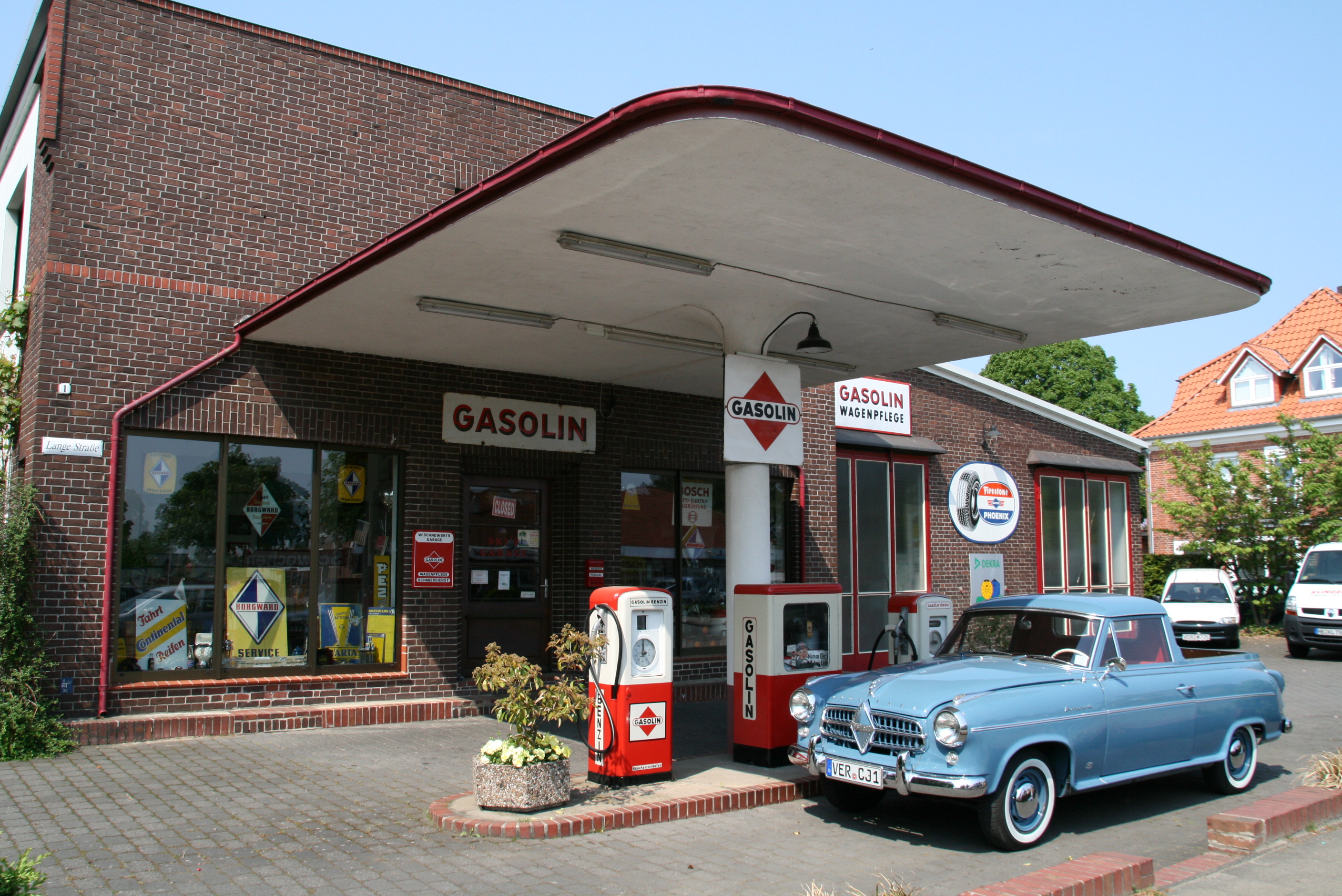
“To be more specific: A gasoline company. They want people to use their facility. They’re cheaper but will not allow us to advertise that fact; we’ve been round and round about it. Small town, they don’t want to start a price war.
“They’re open 24 hours. In addition to the half-dozen credit cards they accept, they also offer a gas card as part of a national network. With the gas card, you can purchase gas 24 hours a day at locations throughout the U.S. These card systems are popular in rural areas.
“This is an especially difficult client to write commercials for; just when I think I know what he’s after and we agree upon it, he changes his whole approach.”
A client who keeps changing his mind about his advertising strategy is:
1. Not unusual.
2. A client who needs educating by the account exec.
You’ve just inherited a gas station, and you need to start making it more productive immediately. It’s all your responsibility, and there is no one available to advise you.
Quick! What’s the first thing you should do?
Review your supplier contracts?
No.
Look at your payroll expenses?
No.
Check your street signage?
Fact is, there is no reason to expect you to know how to run a gas station. You’ve had no training or education for it.
And very few of your clients — be they gas station owners or bank presidents — should be expected to know anything about advertising.
So you’ve got to teach them.
Among other things, you must teach them the importance of:
• A single “core message”
• A message that shows the targeted consumer how this particular product will add to that person’s life
• Frequency of message delivery: The listener has to hear the message enough to notice it, to understand it, to be convinced by it, to remember it, and to act upon it.
• Talking not about the advertiser but rather to the consumer about the consumer’s life
And for a local retail business:
• The importance of giving the listener a genuine reason to act on the sales message NOW
You can’t create a sense of urgency unless there is a genuine deadline, which they can create by making a special offer: Free six-pack of Coke with six fill-ups if you use your card (which they can co-op with Coca Cola).
Or you can set up a three-way deal with a pizza parlor: Coupon good for free pizza with six fill-ups…if they use the gas card. (The pizza parlor gets the free mentions in the commercials plus the increased in-store traffic when people redeem the coupons.)
If they genuinely are the cheapest in town but refuse to advertise that, they need something to set themselves apart:
Open longer hours….
More pumps (which means you never have to wait)….
Frequent buyers’ club….
Cheap hotdogs in their mini-mart….In fact, that could be their big Unique Selling Proposition: Free hot dog with every fill-up. Or 25-cent hot dog with every fill-up.
But if their only true pitch is, “We’re a gas station, just like 100,000 other gas stations,” then I don’t know why they’re advertising at all.
They need to create something of real value to customers to differentiate themselves from their competitors.
Without such a differentiation, they’ll continue to get whatever drive-by traffic happens to come their way, and no more.

A Loyal Reader Writes:
“I just arrived as the new PD at a station that airs an All Request Show. I’ve noticed that when the staff here answers the phone, they tell listeners making requests, ‘Nope, gotta call back near the All Request Show.’
“Now, I’m never going to let our jocks just start playing random requests, but I cannot ever remember telling a listener flat out ‘NO’ (other than for songs totally out of format).
“I’m used to answers like, ‘I’ll see what I can do,’ or “Maybe if I get time,’ or ‘Nope, just played it so maybe later; what else would you like?’ etc.
“It seems to me that telling a listener ‘no,’ only to expect them to try again 2 to 15 hours later, makes our station less accessible to them.
“Can you offer any input on this?”
1. If the listener is requesting a song on your playlist, only a fool would reply, “No, you’ll have to call back during the All Request Show.” Only a fool would deliberately and needlessly insult a customer.
2. I recommend avoiding replies like “I’ll see what I can do” or “Maybe if I get time,” because it sets the listener up for a disappointment and — assuming you’re not able to play it during your shift — it sets you up as someone who didn’t follow through on a promise.
Although many readers will prefer other responses, the one I recommend is an honest, “Hey, thanks very much for your request. We’ll get it on as soon as we can!”
From the perspective of the jock, “as soon we can” means “as soon as it comes up in rotation.”
But what if the caller follows up with, “When will that be?”
Then the jock honestly replies, “That’s difficult to say, but we’ll get it on as soon as we can. Thanks for calling” — and ends the call.
Why is that an honest reply? Because if the PD is smart, s/he has forbidden the jocks from telling the caller exactly when the song is scheduled to play next. It’s “difficult to say” because to do so would be violate the boss’ instructions!