≡ Menu

EIGHT QUESTIONS FROM AN OLDIES RADIO STATION

A Loyal Reader Asks:

1)  How often should station imaging for an Oldies station be updated?

2)  How often should programming promos be updated (ones that promote shows on the station and/or features)?

3)  Is it still true one of listeners’ biggest pet peeves is when announcers talk over songs?

4)  Promotions: Would listeners rather have a chance to win a large prize or small prizes?

5)  Any ideas for station swag when the station has a small budget?

6  Any advice to new morning shows who are being overshadowed by the market leader?

7)  How important is ‘the play along factor’ for listeners who don’t
participate in radio contests?

8)  Should there always be an instant prize AND a chance at winning something large?

1)  Long after the PD complains that he’s sick of it.

2)  No formula. Depends upon the program, station, audience, frequency, etc.

3)  Yes.

4)  If they feel they have an equal chance at either? Obviously, a good large prize. But that assumes a perception of equal winning opportunity. Beyond that, you should get this:

5)  Yes. See #4, above.

6)  Yes.

7)  Extremely.

8)  No.
{ 3 comments }

Let’s pretend you’re listening to the radio.

After you click the “Play” button below, look at something other than your computer monitor. Anything. (Very few people stare at their radios while listening.)

Did you notice how difficult it was to focus on the message?

Imagine the impact on a radio audience member who has absolutely no incentive to “listen” to the commercial. Instead, the spot needs to make itself heard, rather than hoping people listener hard enough.

Why did this happen?

Because they squeezed that script into a 30-second frame. The announcer had to talk much too fast for people to listen easily.

The best solution would have been to make it a :60. Yes, most Australian radio spots are :30s. But they do have :60s.

It’s possible that Nova 96.9 donated the air time and, as a rule, doesn’t “donate” 60-second spots. That doesn’t matter. Donating 30 seconds of ineffective advertising accomplishes only two goals:

1.  Makes the advertiser feel good.

2.  Allows the radio station to claim credit for public service.

But imagine how immeasurably stronger the impact would’ve been if the announcer had been allowed 60 seconds in which to deliver that message.

If it absolutely had to be a :30, then the copywriter needed to cut out half the copy.

On, one more thing: What’s the Call To Action?

Is the goal of this radio spot to get the listener to “look out for One Water at your local Woolworth’s”?

Or is it to get the listener to “find out more” by going to their website?

An effective radio commercial needs exactly one Call To Action. This spot has one too many.

{ 1 comment }

If you have trouble viewing the video above, use this alternate video player.

{ 1 comment }

Opening paragraph of an article in a national business magazine….

“What does it take to be a marketing expert? If expertise is all about familiarity, then just about everybody in America qualifies.”

Um, I hate to break it to that magazine, but expertise “is all about” understanding, not familiarity.

The bane of radio advertising, in particular, is that everyone is “familiar” with it.

Radio commercials are just words, mostly.

And because everyone can speak, everyone assumes they can create a radio commercial.

So they do.

The truth is that anyone can create a bad radio commercial.

So they do.

Radio won’t begin to garner a larger percentage of the overall advertising dollar until it earns it — by giving up the indefensible practice of allowing its commercials to be written by anyone, no matter how unqualified.

That includes clients who don’t have a clue but are encouraged to write their own spots….

Salespeople who have been taught how to sell advertising but have absolutely no advertising education or expertise….

And production people who love playing with the cool toys but have never read even one book or taken a single course in advertising.

But I don’t blame those clients, account executives, and production geeks.

I blame those radio owners and managers who don’t care enough about their clients’ welfare to set higher standards.

Why is there so much bad radio advertising?

Because our industry allows it.

{ 4 comments }
radio promotions listeners

I’ve always been amazed — and dismayed — by the disdain with which so many radio stations treat their listeners…Their fans.

Your most loyal fans? The ones who show up for your most pathetic remotes, in the rain? Losers.

The ones who enter and win so many of your contests? Naturally, they’re “prize pigs.”

(Don’t bother explaining to me that they’re not really fans, that they “listen to all the radio stations to win the contests.” When they’re listening to your station, even if it’s only to try to win something, they’re your listeners.)

Hey, we’re busy. Overworked. Understaffed.

We have too many other things to do that are much more important than treating our listeners well.

We’re much too important to make our fans feel special…or, at least, appreciated.

I know a guy whom I’ll call “Roger.”

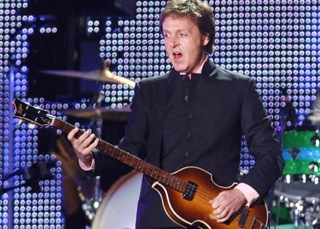
Roger is a member of the Paul McCartney Fan Club — a genuine fan club that is operated by fans, with McCartney’s approval.

A few years ago, McCartney was appearing in concert in Roger’s hometown.

Roger received a phone call from the McCartney fan club:

“Every now and then Paul likes to invite a few fans to meet with him. We’ve selected five fan club members at random, and you’re one of the five. If you’d like to come, you can bring one guest and you can bring whatever items you’d like Paul to autograph for you.”

Roger showed up, with a guest and various album covers for Paul’s autograph. Paul sat and chatted with the group of ten people for about 30 minutes.

Those ten people never will forget it. And it’s pretty likely that they’ve told some (okay, every one) of their friends about their experience.

Observation: If Paul McCartney can figure out a way to stay close to his fans, perhaps that’s not an impossibility for us radio folks, too.

{ 9 comments }