≡ Menu

Every now and then someone will take me to task for “not giving consumers enough credit” or “underestimating the intelligence of consumers” when it comes to their responses to advertising.

This occurs when I point to specific radio commercials or TV ads that fail to anchor a firm connection between the story and the sales message.

Most recently this happened in response to my critique of the Chevy Cruze television commercial:

“I think the writers of the spot are giving consumers the credit for being smart enough make the connection that you’ll rarely visit a convenience store for fuel when you own a Chevy Cruze.”

It’s not a matter of consumers being “smart enough” to make the connection. It’s a matter of whether television viewers care enough to make the connection…and they don’t.

Viewers prefer not to watch TV commercials at all.

I know my saying that will spark retorts of, “What about that great X commercial or Y commercial??” — to which my response is, “Check the latest statistics to see what percentage of DVR users don’t skip past all the commercials.”

A broadcast commercial is intrusive. It interrupts or temporarily impedes the delivery of the programming the viewer has tuned in for.

Viewers don’t want to “figure out the connection for themselves.”

They’re not looking for a puzzle to solve; they’re waiting — often impatiently — for their television program to resume.

To whom is it more important that the consumer understand the connection between the story and the sales message — the consumer, or the advertiser?

Obviously, it’s more important to the advertiser.

That’s why it’s the advertiser’s responsibility to do whatever is necessary to deliver the entire message to the targeted consumer.

Expecting the consumer to do any of the work required to complete that delivery is naive and unrealistic.

{ 0 comments }

CLEVER ADVERTISING IDEA FAILS TO BRING IT HOME

bad advertising exampleHere’s an excellent example of one of the most harmful types of advertising.


Why Is That Commercial Harmful?

1. It’s clever.

2. The story is well-written.

3.  It’s very well produced (which includes the casting).

4.  Viewers enjoy watching it. 

5.  No matter how many times they see and enjoy this commercial, few viewers will associate #s 1 – 4 (above) with the product: The Chevrolet Cruze Diesel. 

Good Storytelling. Poor Advertising. 

But if the story is well-written and produced, how can it be poor advertising? 

The “sales message” — what the advertiser ultimately wants the viewer to remember — isn’t part of the story:

“Chevrolet Cruze Clean Diesel, with the best gas mileage of any non-hybrid.” 

That’s the sales message, and it’s delivered only via the announcer voice over (which viewers tune out) and 2 seconds of words on-screen (which viewers ignore). 

The story isn’t about a guy who’s a stranger at gas stations because he drives a Cruze Diesel. It’s about a guy who’s a stranger at gas stations because he drives a car that doesn’t use much gas. 

In fact, with the announcer saying “of any non-hybrid” and viewers not consciously listening, probably 60% of viewers later will think it was a commercial for “some hybrid car.” 

“But What About The Value of Repetition?” 

The story ends before the sales message begins, regardless of how many times a viewers sees this commercial. Repetition offers very little help.

If a tree repeatedly falls in a deserted forest, how many more people will hear it due to the repetition? 

Why This Commercial Is So Harmful

See #s 1 – 4 (above).  

This ad will win an award. 

It’ll probably make USA Today’s meaningless list of “People’s Favorite TV Commercials.” 

The advertising agency will land new business from clients who are impressed by the spot’s warm, feel-good nature…and by the award.

Other agencies and advertisers will emulate the Good Storytelling + Failure to Connect to Sales Message model. 

Ratings for Cheers reruns probably will enjoy a bump.

And more business will continue to squander their advertising dollars. Some of them will have less money to waste than Chevrolet, and their employees or stockholders will feel the hurt.

But it’s an enjoyable 20 seconds of entertainment…followed by a sales message delivered only in a deserted forest.

{ 5 comments }

QUICK RADIO STATION WEBSITE TIP

Recently I came across a radio station website that included the following link on their “Contacts” page:

“PSA Requests.”

I’m pretty sure what they meant to say is:

“Want Us To Announce Your Community Event?”

If it didn’t, they could’ve changed it to:

“Local Announcement Requests”

Only broadcasters know what a PSA is.

Fortunately, your station website makes no mention of “PSAs” — right?

           76 Ways To Improve Your Radio Station’s Website

{ 1 comment }

THE RADIO COMMERCIAL FROM HELL?

bad radio commercialA Loyal Reader uploaded a recorded radio advertisement, referring to it as “The Radio Commercial from Hell.” He included a brief explanation.

“So this is what passes for an agency spot these days, as aired on a prominent national radio network.

“Between the glottal fry on the female VO talent, the room tone and the popped P at :48, the bar has obviously been set very low for the rest of us now.“

I hear plenty of bad radio commercials. It takes something really bad to surprise me.

Something like….

We needn’t even ponder whether the commercial is legal.

I’m sure they’d argue that by ending it with, “That’s NewsBreak from (Mumbled Advertiser Name),” they’re complying with FTC and FCC regulations which require commercial advertisers to be clearly identified.

Personally, I think radio stations that air this advertisement are exposing themselves to the risk of FCC penalties.

Then again, not being understand much of it puts me at a disadvantage in assessing its legal compliance.

{ 3 comments }

WHEN RADIO DJs ARE EXPECTED TO PREPARE DURING THE SONG

oldies radio show prepI happened to listen to an oldies radio station in a certain very large U.S. market, which was presenting (for no apparent reason, and with no sense of fun or audience involvement) a “One-Hit Wonders Weekend.”

oldies radio show prep

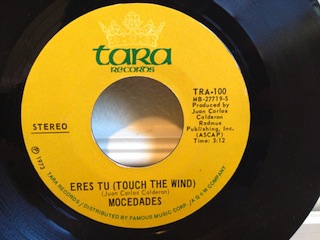
The jock outro’d Mocedades’ “Eres Tu”:

“…which is Spanish for ‘Touch The Wind.’ ”

Except, of course, it’s not.

It’s Spanish for “You Are.”

The flip side of the Mocedades record was entitled “Touch The Wind,” with new lyrics added to the melody of “Eres Tu.”

This is a station that presents itself as the authoritative source on Oldies (or Gold, or Classic, or whatever you want to call it) music.

Gee, I wonder if anyone in that market, with its mere 48.2% Hispanic population, would notice the error?

Why did the DJ make such a sloppy mistake?

Because the jocks at this station are required to provide interesting tidbits about some of the songs.

And from what source are they expected to get those tidbits?

While the music is playing, they are supposed to go online and find something — anything — about the title or artist.

As a result, they end up delivering the first piece of trivia they stumble upon — because they’re in a hurry.

The first piece of trivia, of course, is likely to be the one that is most well-known.

You need to dig for the lesser-known (and therefore often more interesting) bits of information.

This big oldies station is doing exactly what its listeners can do just as easily and just as well (or in this case, better):

A fast Google search.

So the radio hosts end up telling listeners fascinating facts that are less than fascinating…because the audience already knows them.

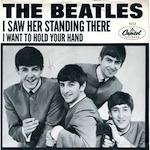
If you tease an upcoming Beatles song by saying, “Its original title was ‘Scrambled Eggs,'” many listeners won’t know which song you’re referring to. But many will, because it’s a commonly known fact regarding one of the most popular songs of the 20th Century.

On the other hand, quite a few intrigued listeners would sit through a commercial break if they heard the jock say:

“You know how ‘I Saw Her Standing There’ begins, right? ‘She was just 17 / You know what I mean.’

“What DID the Beatles mean by ‘you know what I mean’?”

When I ask radio people who attend my seminars what that line means, the most common responses I get are:

“Hot”

“Jail bait”

“Young & pretty”

What do you think that line means?

Nope. It doesn’t mean what you thought it means.

Here’s Paul McCartney himself to tell you where that line came from.


View this Paul McCartney video on YouTube.

If you’re a Beatles fan, do you find the “You know what I mean” insight a bit more interesting than the more tired “Scrambled Eggs = Yesterday” bit?

If so, it’s probably because the info is new to you.

“Scrambled Eggs” was interesting when you first learned it — all those years ago.

But jocks who are expected to do their “research” without any prep time…during their shows…with Google as their research tool….

Well, they’re never going to find “the good stuff.”

Instead, they simply do exactly what listeners can do for themselves: a quick, superficial Internet search.

And they rob radio of its magic.

Download Dan O’Day’s PERSONALITY RADIO.

{ 2 comments }