For the umpteenth time, you can’t remember the security code that lets you drive into the ad buyer’s executive parking garage. So….
Huh?
You don’t know what the heck I’m talking about?
Successful radio advertising intersects common human behavior and experience.
But the situation I just described doesn’t reflect your behaviors or experiences?
Heck, maybe you actually went back and read that opening sentence a second time, trying to make sense of it.
That’s one advantage I have over the radio commercial I’m about to share with you: You came here. Unless you mistyped a URL or your dog accidentally clicked on a link for you, odds are you came here intentionally.
If so, probably you expected to see some words here. So you came prepared to read at least some of the words in this posting.
But — except for people who are “in the business” — listeners don’t come for the commercials. The commercials are an interruption, and for radio ads to reach the listeners’ consciousness they need to grab their attention and establish relevance immediately.
Before you listen to this commercial, take a moment to think about the events in your life that you celebrate.
Birthdays?
Anniversaries?
Graduations?
Christmas?
Hanukkah?
Eid Al-Fitr?
Valentine’s Day?
Groundhog’s Day?
Getting a promotion?
Getting fired? (Hey, sometimes that’s a good thing.)
How about….
If you don’t happen to be an American, let me make this clear: Nobody “celebrates” Presidents Day.
Some people — mostly government employees — don’t have to work on that “holiday.”
But no one celebrates it.
No one ever has said:
“So, what do you want to do for Presidents Day?”
“So, do you have big plans for Presidents Day?”
“I’m throwing a big party for Presidents Day. Wanna come?”
“So, how did you celebrate Presidents Day?”
Here’s how the holiday most often is referred to:
“Has the mail come yet?”
“No, it’s a holiday, remember?”
“Oh, yeah. Presidents Day.”
If nobody “celebrates” Presidents Day, why would any advertiser try begin a conversation with consumers by inviting them to “celebrate Presidents Day” with that advertiser?
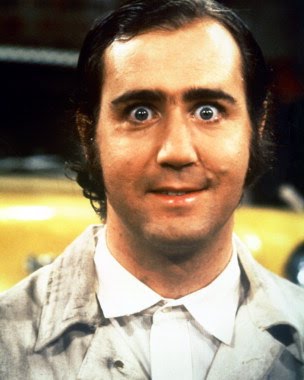
The late American *comedian Andy Kaufman was a devotee of Transcendental Meditation. (*He never referred to himself as a comedian. He called himself a “Song & Dance Man.”)
At a TM gathering on May 5, 1971, Andy questioned Maharishi Mahesh Yogi (the guy The Beatles were entranced with) about comedy.
According to the account in LOST IN THE FUNHOUSE: THE LIFE AND MIND OF ANDY KAUFMAN, Maharishi explained that what a comedian does is “akin to building two walls side by side and leaving a space in between. The mere presence of those two walls then creates a contrast based on an awareness of the space.”
Now, I don’t meditate. I have enough trouble concentrating on anything, much less on nothing.
When I came upon that message, I was prepared to scoff at whatever Maharishi offered as an explanation of comedy.
But doggone if that guy didn’t nail it.
The impact of the humor occurs in the spaces between the words.
One of comedy’s key elements is surprise.
In radio advertising, the question is not, “Can we surprise the audience?”
The question is, “Can we make the audience want to experience that radio commercial for the 20th or 30th time by making them anticipate the surprise each time?”