≡ Menu

Loyal Reader Scott Chasty writes:

“I write, I do VO, heck, I even do an on-air shift. But my bread and butter lies in the production department. And I take a lot of pride in being able to un-pop ‘P’s’ and remove that irritating clicking sound when you get an announcer too soon after they’ve just finished their lunch (we call it ‘peanut butter mouth’).

“Imagine my surprise when I saw this article suggesting that slick production can be bad for a commercial’s success rate. (See item #10 on their list).

“And yes, any production that doesn’t support or enhance the core message is counter-productive. But I’m not sure that’s what they’re talking about in this article.

“Dan, I’d love to get your thoughts on this.”

Jeff and Brett don’t appear to be contradicting your beliefs.

As a multiple Repeat Offender at my International Radio Creative & Production Summit, you know my position: Either the production elements enhance the sales message (i.e., the message the advertisement is intended to deliver) or they detract from it.

So the test for every sound in a radio commercial is: “Is that strengthening the impact of the message on the targeted listener?”

Of course you’re proud of your ability to un-pop p’s. Popped p’s are distractions when they can be perceived by listeners because in real life (i.e., without a microphone) nobody pops p’s.

Breathing, however, is a natural element of human speech. If the person speaking is “eating the mic” and every breath sounds like Darth Vader, a little production room help might be called for.

But removing natural breaths that aren’t overly intrusive isn’t likely to improve the listener response rate.

Unfortunately, most in-station radio producers devote far too much attention, time and effort to the “production elements” and not enough to the performance. And if they also write the spots, usually they give more thought to the producing than to the writing.

That’s a problem.

The reference to Seth Godin’s declaration that “perfect is boring” is misleading, because to most producers “perfect” = “as good as it can be; flawless.”

The statement applies, however, if we refine the definition of “perfect” to “every moment sounding excellent purely from a typical radio production director’s point-of-view” — exciting sounds, expertly packaged, technically flawless.

Is the message clear and compelling? Is anyone likely to listen to it? If they listen, will they understand and care about the message? Well, maybe not. But to a radio production guy/gal, it sure sounds good.

In addition to “good production” having the wrong meaning for most radio people, there’s another reason those “perfect” spots so often fail:

From their very first moments, they sound like radio commercials.

From the first sound, the listener thinks, “Oh, radio commercial!” and either mentally or literally tunes out.

If it sounds like all the other radio ads — despite being “well produced” — then the listener categorizes it with all the other radio ads.

That statement, of course, will outrage a few readers.

Years ago I conducted a radio advertising workshop at a broadcast industry conference in the midwest. As always, I pointed out that when a commercial break begins, listeners are tempted to tune out. After all, they don’t listen to your station for the commercials.

One station owner approached me afterward and politely but forcefully disagreed:

“People turn on the radio,” he said, “to learn about the wonderful bargains available to them in their community.”

I thanked him and wished him a safe journey back to his home planet.

On Earth, at least, listeners tune in for the programming. They stay for the commercials only if the ads speak to them in a compelling manner about something that is highly relevant to their lives.
{ 2 comments }

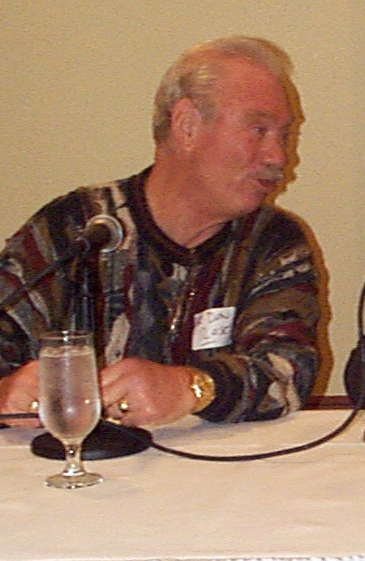
KFRC San Francisco Radio WFIL PhiladelphiaDr. Don Rose was one of my radio heroes.

Not because he was so successful, but because he achieved his success by being himself on the air…and by remaining an incredibly nice, warm person even when he dominated the 4th largest market in the U.S. (In San Francisco, there was Dr. Don…and then there was everyone else.)

By the time of PD Grad School 2000, Dr. Don had retired from radio. He and Gary Owens graced us with a 2-person panel session called “The Radio Entertainer.”

This brief excerpt is from that session.

That’s one of the secrets that successful radio professionals don’t quite realize until they hang up their headphones:

No matter how successful they become, how many fans they have, how much they’re honored by their community or by the radio industry, the success — in some important ways, their very existence — is ephemeral.

When they retire, or when they suddenly discover there’s no place for them in radio any more, their fame fades quickly.

The good ones put as much dedication, sweat and hard work into their careers as does any other professional. But at the end of their careers, the successful architects can look back at the buildings that bear their imprints. The artists have their paintings. The authors have their books.

But the radio personalities? All we leave behind are the memories we helped to create for others.

{ 3 comments }

HOTLINING THE RADIO DJ IS FOR WIMPS

Radio Program Directors:

Don’t hotline your jocks.

“Hotlining,” of course, consists of hearing the air personality make a mistake and immediately calling him on the phone during his airshift to scream at him.

Don’t do it.

It’s a sure-fire way to ruin the rest of the jock’s show.

It’s a power trip.

The embedded message in a hotline call is, I can hotline you, but you can’t hotline me. I’m the boss!”

Have you ever been hotlined?

What was your immediate response as soon as you saw that line flashing?

I know what it was. Whether uttered aloud or thought silently, your response consisted of two words:

“Oh, ____.”

But…

You’re a dedicated radio program director. You work long and hard, trying to perfect your product and build your audience…and then some idiot disc jockey screws it all up by playing a record out of rotation or reading the wrong liner card.

You go nuts. How hard can it be to follow a music clock when the computer has done all the work for you?

You’re furious. You want to kill the guy.

You know what? It goes with territory. That’s part of the frustration of being a program director. That’s why you get the private office and the business cards and maybe even your own parking space.

As Super Chicken was fond of reminding Fred, “You knew the job was dangerous when you took it.”

If you want to motivate your staff to its peak performance, you wait until after the jock has finished his air shift and after you’ve calmed down.

By that time, you might decide it really isn’t worth talking about.

If you decide it is worth discussing, you pick a time, place and manner which enable you to motivate the jock to perform better, rather than simply to let off steam and ruin the rest of his show.

P.S. If a consultant ever hotlines a jock, the consultant should be fired.

{ 3 comments }

BRILLIANT, R-RATED MARKETING IDEA

Here’s a brilliant marketing idea I’ve had in my files for years.

It was forwarded to me by radio programming consultant Jaye Albright.

The accompanying note explained that a sports shop in Germany promoted its grand opening by advertising this offer:

“Get dressed for free, from head to toe, first come first serve. Only condition: come naked.”

Not all of the photographs taken during the grand opening were as coyly posed as these. I’ve thoughtfully decided to shield you from the more interesting — I mean, more graphic — shots.

naked shoppers, guerrilla marketing
{ 5 comments }

HOW FAR IN ADVANCE SHOULD A RADIO HOST “TEASE”?

At my personality radio seminars, I teach the power of the on-air “tease.”

Often someone will ask me, “How far in advance can you tease something?”

Here’s the formula:

“The bigger the explosion, the longer the fuse.”

Got it?

{ 1 comment }